Table Of Content
You've got to decide what your concrete classes will be somewhere, the Client is still written to the AbstractFactory interface. Say you create a.jar, and someone else uses your jar and wants to use a new concrete object in your code. If you are not using abstract factory, then she has to modify your code or overwrite your code. But if you are using abstract factory, then she can provide a factory and pass to your code and everything is fine.
Abstract Factory in Java
Factory Design Pattern in Unity - Meet Janiyani's Blog - GameDev.net
Factory Design Pattern in Unity - Meet Janiyani's Blog.
Posted: Wed, 21 Feb 2024 08:00:00 GMT [source]
The source code for the presented sample can be found on github. Tutorials Point is a leading Ed Tech company striving to provide the best learning material on technical and non-technical subjects. Create an Abstract class to get factories for Normal and Rounded Shape Objects.
Why is there a Creator and a Client?
In the Abstract Factory pattern, we get rid of if-else block and have a factory class for each sub-class. Then an Abstract Factory class that will return the sub-class based on the input factory class. At first, it seems confusing but once you see the implementation, it’s really easy to grasp and understand the minor difference between Factory and Abstract Factory pattern. Like our factory pattern post, we will use the same superclass and sub-classes.
What are the differences between Abstract Factory and Factory design patterns?
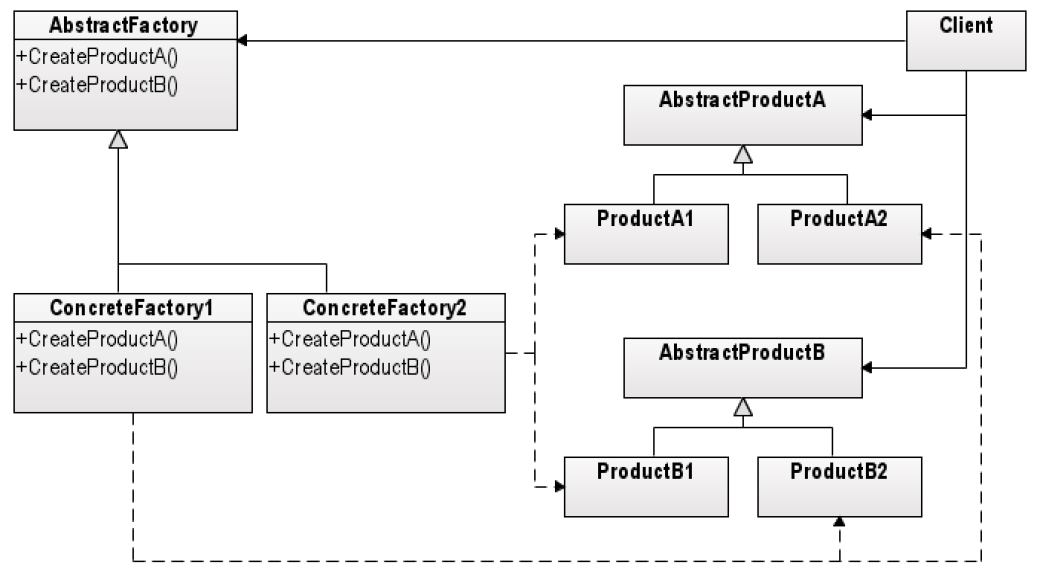
If the code starts to diverge from those words then probably something isn’t quite right. Let’s make this simple, Concrete Factory is inheriting from Abstract Factory and Product from Abstract Product. The diagram is as plain as it looks; two classes inheriting from their abstract classes. The concrete factory is the one to do the dirty work to create specific Products (which is identified by the red line).
A real life example for the use of the Abstract Factory pattern is providing data access to two different data sources. You have two different data access interfaces e.g. an IReadableStoreand IWritableStore defining the common methods expected by your application regardless of the type of data source used. To apply the abstract factory pattern in the pizza store application, let us first create the products that the factories will produce. Therefore, the Abstract Factory Pattern delegates the creation of objects to another class.
Abstract Factory Design Pattern Examples in JDK
With this approach, the only thing that the client knows about the chair is that it implements the sitOn method in some way. Also, whichever variant of the chair is returned, it’ll always match the type of sofa or coffee table produced by the same factory object. Abstract Factory is a creational design pattern that lets you produce families of related objects without specifying their concrete classes.
And it must all be put into a single place so that you don’t pollute the program with duplicate code. Use the Factory Method when you want to save system resources by reusing existing objects instead of rebuilding them each time. Imagine that you write an app using an open source UI framework. Your app should have round buttons, but the framework only provides square ones. You extend the standard Button class with a glorious RoundButton subclass.
I thought factory methods only create one product?
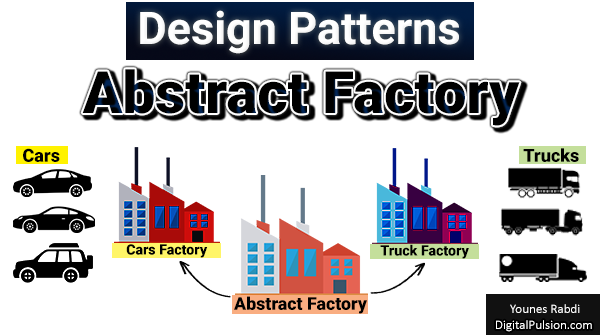
Doing so commits the class to particular objects and makes it impossible to change the instantiation later without changing the class. It prevents the class from being reusable if other objects are required, and it makes the class difficult to test because real objects cannot be replaced with mock objects. You want to design a system to create cars with specific configurations for different regions, such as North America and Europe. Each region may have unique requirements and regulations, and you want to ensure that cars produced for each region meet those standards.
This pattern is best suited when one wishes to create multiple categories of an object by abstracting its implementation. Through the Abstract Factory Pattern, we define interfaces to create families of related objects without specifying their concrete classes. Design patterns help make code understandable, scalable, and reusable. There are different categories of design patterns, depending on the problems being addressed. When code is modularized, it's easier to add newer features without making drastic changes to the project. This is one of the most commonly used design patterns and many times it is used in combination with other design patterns.
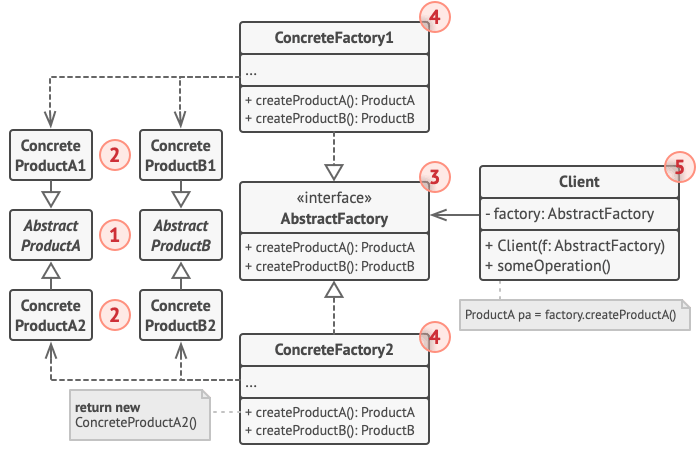
The Abstract Factory design pattern provides a way to create families of related objects without specifying their concrete classes. This allows for code that is independent of the specific classes of objects it uses, promoting flexibility and maintainability. In a well-designed program each class is responsible only for one thing. When a class deals with multiple product types, it may be worth extracting its factory methods into a stand-alone factory class or a full-blown Abstract Factory implementation. The Abstract Factory interface declares a set of creation methods that the client code can use to produce different types of UI elements.
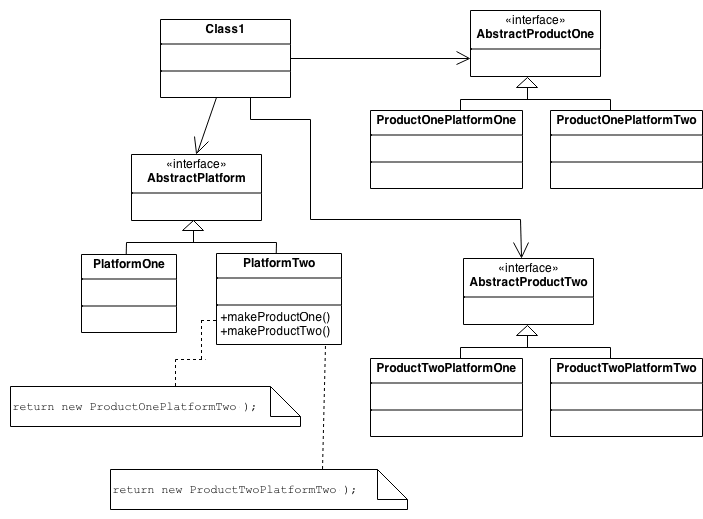
The Factory1 class implements the AbstractFactory interface by instantiating the ProductA1 and ProductB1 classes. A factory is the location of a concrete class in the code at which objects are constructed. Client code works with factories and products using abstract interfaces. It makes the same client code working with many product variants, depending on the type of factory object.
The partial implementation of the parent abstract factory class is fulfilled by its children/concrete class. Each child class will contain a func() method to fulfill the abstract class' requirements. In Python, every abstract class is derived from the ABC class of the abc module. The abstract method is declared inside the abstract class but not implemented, and all implemented methods are passed down to concrete classes. But imagine for a second how many products a car has and how many things can a car factory do. Now imagine the chaos maintaining a badly designed code every time BMW decides to alter a door handle.