Table Of Content
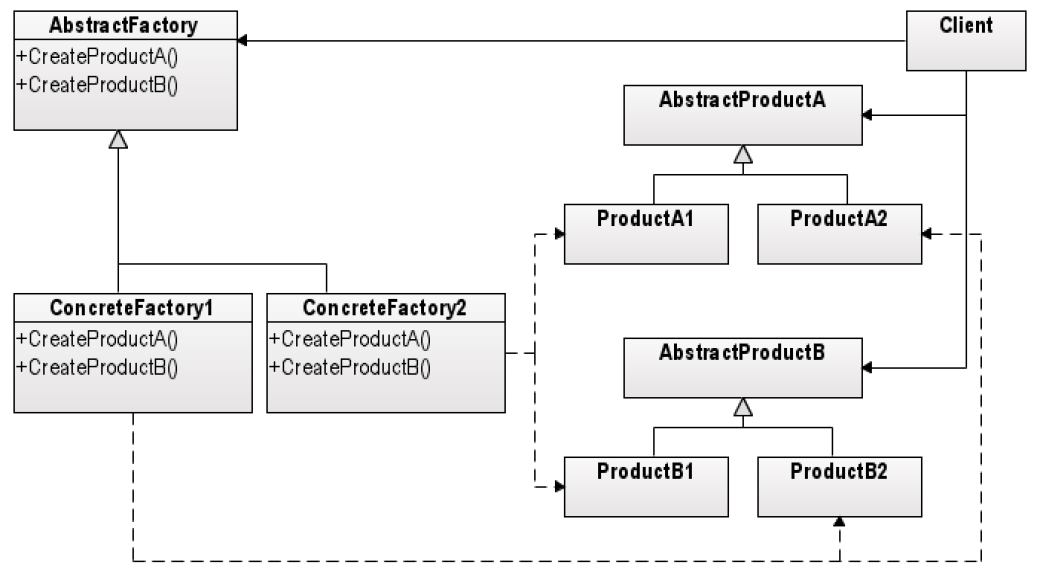
Abstract Factory is a very central design pattern for Dependency Injection (DI). Here's a list of Stack Overflow questions where application of Abstract Factory has been accepted as the solution. Now that our enhanced pizza store is ready for use, let us write a couple of unit tests to observe the abstract factory pattern at work. You can notice that apart from the abstract methods, there are also extra features added to the concrete products to make them functional in their own context. For instance, all Animals have an eat() function, commonly implemented between all animals, but each have unique speak() functions so the abstract Animal class leaves that up to the children.
The Flyweight Chronicles: How to Make Your Code Weightless!
One should take care when using factory methods since it's easy to break the LSP (Liskov Substitution principle) when creating objects. Without the factory method, the HTTP server users (i.e. programmers) would be forced to use implementation specific classes which defeat the purpose of the IHttpRequest interface. From my own experience, most of the time, a Factory is implemented and as the project grows it gets changed into more complex design patterns such as an Abstract Factory.
Abstract Products
Here, for example, when all widget objects such as window, button, etc. have MS variant except a scroll-bar that is derived from MAC variant, the purpose of the tool fails badly. With the Abstract Factory pattern, a classdelegates the responsibility of objectinstantiation to another object viacomposition ... Secondly, the level of indirection (abstraction) provided by interfaces normally suffices when working with dependency injection.
Types of Creational Patterns
In this example, we also used an enum to parameterize which type of kingdom factory the client will ask for. Design patterns provide tested and proven development paradigms, which can speed up the development process. For effective software design, consideration of issues that might not become visible until later in the implementation is required. Reusing design patterns assists programmers and architects who are familiar with these concepts in avoiding subtle issues that can lead to major problems and making code easier to read and understand. Abstract Factory defines an interface for creating all distinct products but leaves the actual product creation to concrete factory classes.
Furniture vendors update their catalogs very often, and you wouldn’t want to change the core code each time it happens. We can drop ship our fabrics to your factory anywhere in the world. Let our network of factories set up and deliver our fabrics right to your factory's door. Our drop ship program can reduce the amount of time and money you spend on your shipping and processing and gives you the freedom to concentrate on other things.
Then you can make all variants of products follow those interfaces. For example, all chair variants can implement the Chair interface; all coffee table variants can implement the CoffeeTable interface, and so on. We are going to create a Shape interface and a concrete class implementing it.
As you get further into enterprise application development, you will you will encounter use cases for the abstract factory pattern, especially as the objects you’re creating become more complex. Its not uncommon to start off using the factory method design pattern and have your code evolve into using the abstract factory design pattern. If this is the case, you should consider implementing the concrete factory as a Singleton. If you are familiar with factory design pattern in java, you will notice that we have a single Factory class. This factory class returns different subclasses based on the input provided and factory class uses if-else or switch statement to achieve this.
You will often hear the abstract factory design pattern referred to as a “factory of factories“. The code that uses the factory method (often called the client code) doesn’t see a difference between the actual products returned by various subclasses. The client knows that all transport objects are supposed to have the deliver method, but exactly how it works isn’t important to the client. Now, we can design a factory for our different kingdom factories. In this example, we created FactoryMaker, responsible for returning an instance of either ElfKingdomFactory or OrcKingdomFactory. The client can use FactoryMaker to create the desired concrete factory which, in turn, will produce different concrete objects (derived from Army, King, Castle).
Wait! Your AbstractFactory isn't, well... er Abstract
As long as all product classes implement a common interface, you can pass their objects to the client code without breaking it. They might be unknown beforehand, or we simply want to allow for future extensibility. The factory determines the concrete type of object to be created, and it is here that the object is actually created. However, the factory only returns a reference (in Java, for instance, by the new operator) or a pointer of an abstract type to the created concrete object.
If you have a creation method in base class and subclasses that extend it, you might be looking at the factory method. Suppose you’re building a tool where you’ve objects and a concrete implementation of the interrelations of the objects. Since you foresee variations in the objects, you’ve created an indirection by assigning the responsibility of creating variants of the objects to another object (we call it abstract factory). This abstraction finds strong benefit since you foresee future extensions needing variants of those objects. If you look at the design patterns, almost all of them can be made redundant.
Concrete factories correspond to specific operating systems and create the UI elements that match that particular OS. Starting from initial concept ideas, sketches, or prototypes, we create production-ready patterns and sales-ready samples. We have backgrounds in fashion design, pattern making, costuming and fine art. Our design-driven perspective provides us with a common language we can share with our clients.

On a Client’s request, we need to create individual furniture objects so that they match other objects of the same family. Also, we don’t want to change existing code when adding new products or families of products to the application. Here is the class diagram of abstract factory design pattern implementation.
DZone Coding Java The Factory Pattern Using Lambda Expressions in Java 8 - DZone
DZone Coding Java The Factory Pattern Using Lambda Expressions in Java 8.
Posted: Wed, 01 Mar 2017 08:00:00 GMT [source]
Now with this diagram, it is easy to understand that this design pattern can easily be updated by adding more concrete factories and more products i.e. In other words, this picture can only grow wider and definitely not in height. The Factory Method is a creational design pattern that provides an interface for creating objects but allows subclasses to alter the type of an object that will be created. On the other hand, imagine you’re writing a framework so that many people can built various tools (such as the one in above examples) using your framework. By the very idea of a framework, you don’t need to, albeit you could not use concrete objects in your logic. You rather put some high level contracts between various objects and how they interact.
An example is an abstract factory class DocumentCreator that provides interfaces to create a number of products (e.g., createLetter() and createResume()). Each of these products is derived from a simple abstract class such asLetter or Resume of which the client is aware. The client code would acquire an appropriate instance of the DocumentCreator and call its factory methods. Each of the resulting objects would be created from the same DocumentCreator implementation and would share a common theme. The client would only need to know how to handle the abstract Letter or Resume class, not the specific version that was created by the concrete factory.
After you’ve created your account, you will start the competition right away. All variants of the same object must be part of a single class hierarchy. The Client object calls createProductA() on the Factory1 object, which creates and returns a ProductA1 object. Thereafter, the Client calls createProductB() on Factory1, which creates and returns a ProductB1 object. Implement the interfaces to create specific instances of cars and specifications. Implement the abstract factory interface to create cars and specifications specific to North America, Europe.




No comments:
Post a Comment